

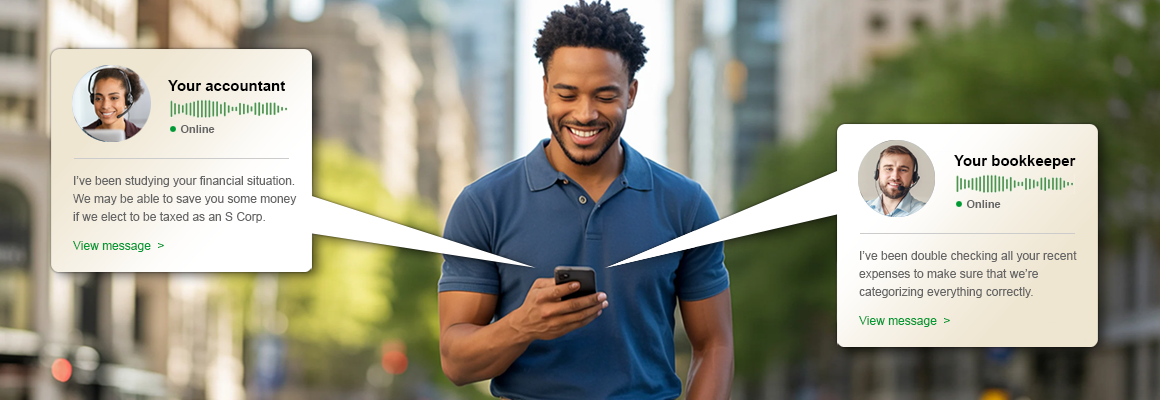
For tax year 2025, Vyde scheduled more than 12,000 calls with small business owners to provide bookkeeping support, answer financial questions, and help businesses stay organized throughout the year. Our team works directly with customers to help them better understand their finances and keep their books up to date.
Vyde gives you the clarity, structure, and guidance to confidently run and grow your business.
Vyde’s accounting service brings together expert oversight and real-time financial insight to give small business owners peace of mind, smarter decision-making power, and visibility into their business performance.

Stay ahead of taxes with proactive guidance from experts who help you plan, prepare, and avoid costly surprises.

Understand your tax situation clearly so you can make smarter business decisions, reduce liability, and keep more of what you earn.

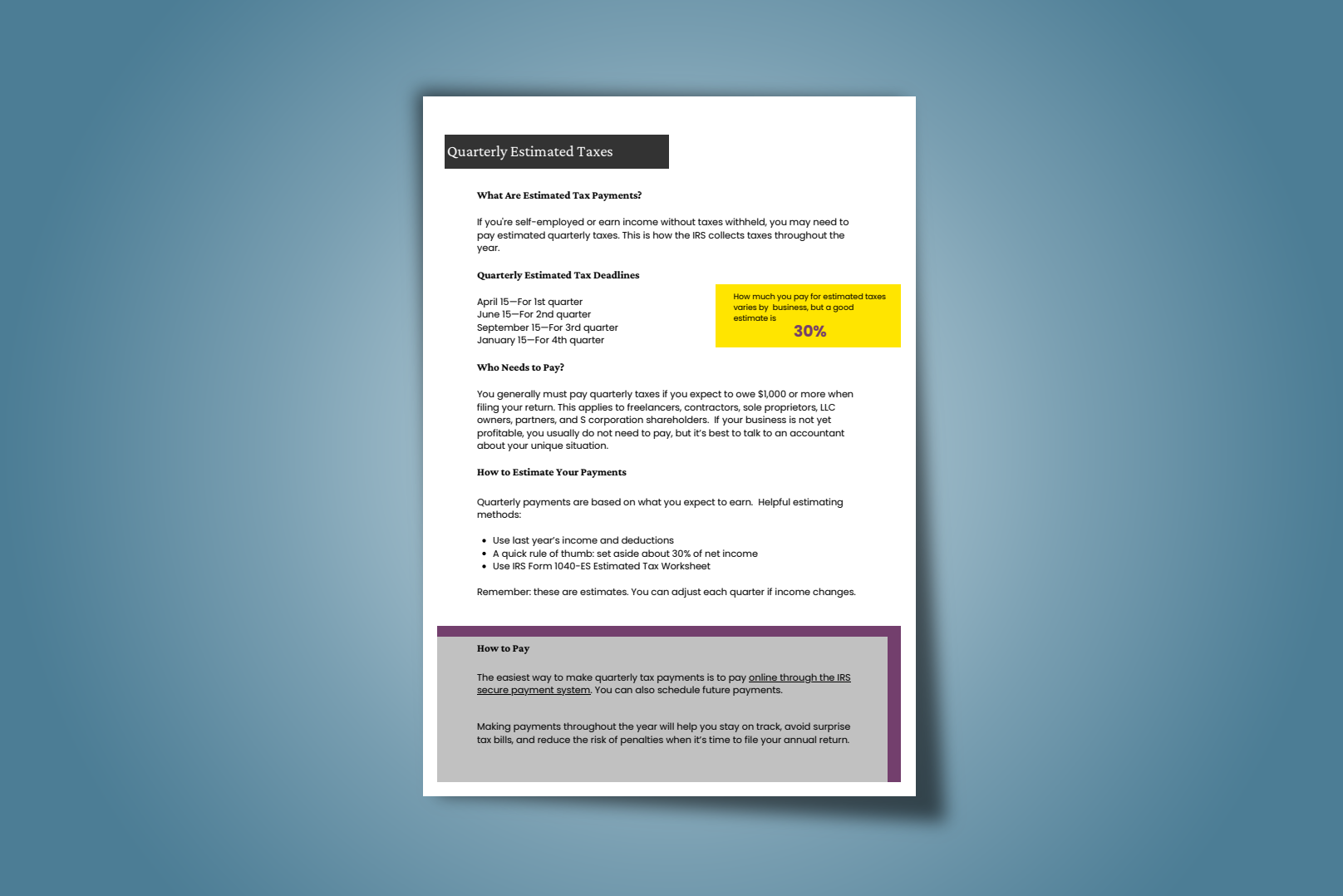
Know what to expect before tax season arrives with a clear plan for estimated taxes, deductions, entity strategy, and year-end planning.

Confidently navigate business formation, compliance, contracts, and other critical legal needs as you grow. Learn more >
Simplify and automate your sales tax compliance so you can reduce manual work, stay current with changing tax rules, and sell with confidence. Learn more >
Get clear answers to common questions about our tax advisory services, so you can stay organized, compliant, and confident in your tax strategy.
You may be able to deduct a home office if you use part of your home regularly and only for your business.
To qualify, the space usually needs to be:
Used regularly
You use the space consistently for your business.
Used only for business
The space is not shared for personal use. For example, a kitchen table, guest room, or other shared space usually does not qualify.
Connected to your business
The space is your main place of business, or a place where you regularly meet with clients or customers.
A qualifying space could be a separate office, converted garage, dedicated studio, or another clearly defined area used for business.
There are some exceptions, such as certain daycare spaces or areas used to store inventory, so it’s a good idea to get guidance before assuming your space qualifies.
The home office deduction can help lower your business’s taxable income, but it generally cannot be used to create a business loss. In simple terms, it can reduce the amount of business income you pay taxes on, but it usually cannot make your business look unprofitable if it was not already.
There are two common ways to calculate the deduction:
Simplified method
This uses a standard dollar amount per square foot, up to a maximum square footage limit.
Actual expense method
This uses a percentage of certain home expenses, such as rent, mortgage interest, utilities, insurance, repairs, or maintenance. For example, if your home office is 10% of your home, you may be able to deduct 10% of certain eligible expenses.
Vyde can help you determine whether your home office qualifies and which method makes the most sense for your business.
You may be able to deduct vehicle expenses if you use your car, truck, or van for business.
The most important step is keeping good records. This includes recording your vehicle’s make, model, and year as well as the year you started using it for your business. You should also track your business miles, including:
Many business owners use a mileage tracking app to make this easier.
There are two common ways to calculate vehicle deductions:
Standard mileage method
This uses a set mileage rate for each business mile driven. The rate can change each year.
Actual expense method
This uses the business portion of actual vehicle costs, such as gas, insurance, repairs, maintenance, registration, lease payments, and depreciation.
The best method depends on how much you drive, whether you use the vehicle for both personal and business use, how expensive the vehicle is to operate, and how well your records are maintained. There are also IRS restrictions on when you can use or switch between the standard mileage method and the actual expense method. Because your first-year choice can affect your options later, it’s important to get it right and talk with an accountant before deciding. Vyde can help you compare the options and choose the method that fits your situation.
Business meals may be deductible when they have a clear business purpose, but the rules are more limited than many business owners expect.
In many cases, eligible business meals are only partially deductible. To support the deduction, it’s important to keep:
Examples of meals that may qualify include meeting with a client, discussing business with a partner, or providing food for employees in certain business settings.
Meals that usually do not qualify include personal groceries, solo lunch breaks, convenience store snacks, or meals that do not have a clear business connection.
Entertainment expenses are generally not deductible. For example, tickets to a game or a round of golf with a client may be a business relationship expense, but that does not necessarily mean it lowers your taxable income.
There are some exceptions, such as certain employee events. Vyde can help you review these expenses so you capture what is allowed without claiming items that may create unnecessary risk.
There is no one-size-fits-all list of deductions because every business is different. What makes sense for a contractor may not apply to a designer, consultant, salon owner, or ecommerce shop.
In general, a business expense should be ordinary and necessary. That means it is common for your type of business and helpful for running or growing the business.
Common business deductions may include:
Cell phone and internet
The business-use portion of your phone or internet costs.
Conferences, seminars, and trade shows
Registration fees, booth costs, and related travel when the event has a clear business purpose.
Business travel
Flights, hotels, rental cars, and other travel costs when the trip is primarily for business.
Advertising and marketing
Ads, signs, website costs, branding, promotional materials, and marketing tools.
Business insurance
Liability insurance, property insurance, malpractice insurance, data breach coverage, or other business-related policies.
Interest
Interest on business loans, business credit cards, equipment loans, or other business debt.
Salaries and benefits
Employee wages and certain benefits, as long as they are reasonable and properly documented.
Business meals
Eligible meals with a clear business purpose, usually subject to limits.
Supplies and equipment
Tools, computers, office supplies, materials, and other items used in the business.
Software and subscriptions
Business software, apps, plugins, website tools, and other recurring subscriptions.
The most important rule is to keep business and personal expenses separate whenever possible. Using a dedicated business bank account makes it much easier to track expenses and support deductions.
Vyde can help identify, categorize, and report your deductions so you don’t have to figure it all out alone.
Supporting small businesses is what we do. Let's chat about your tax strategy so we can help you keep more of your hard-earned money.
Already a Vyde customer? Sign into your Vyde dashboard to schedule a call with your accountant or attend an Accountant Live session.